Resource
How Glamour Models Are Transitioning To Cam Sites
There was a time when getting a spread in a men's magazine was the pinnacle of a glamour modelling career. A magazine cover, a regular feature slot, a spot in one of those "Sexiest Women" polls... that was the dream.
Models would pocket a flat fee for a day's work, get a boost in public recognition, and hope it led to something bigger. Maybe a reality TV appearance (Love Island btw!). Maybe a brand deal. Maybe a recurring gig...
A foot in the door...
Then, in the space of about two years, the entire men's magazine industry collapsed out of nowhere - not just in the UK, but globally. Many of the models who built their careers through those publications had to adapt fast.
And as we'll see below, the camming industry was ready to receive them.
The "Lads' Mag" Era Is Over
It was great while it lasted, but the magazine era is a shell of its former self.
The decline played out most dramatically in the UK, where "lads' mags" were a cultural institution.
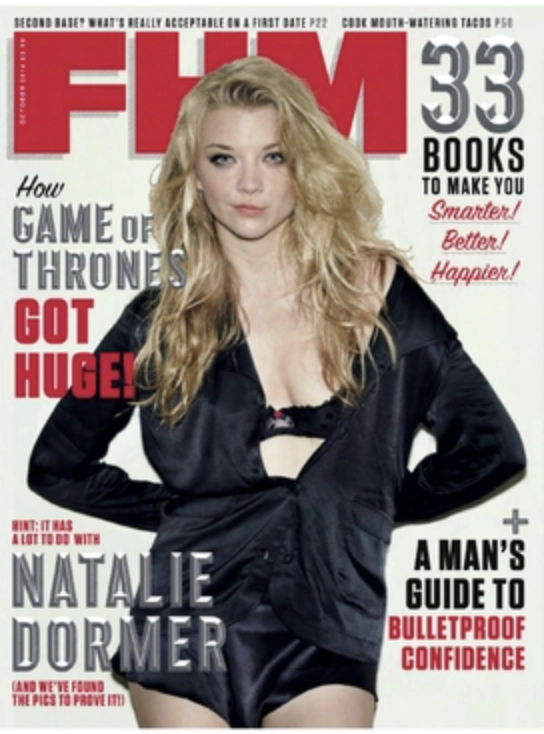
Nuts shut down in 2014. FHM and Zoo both closed in 2015. Loaded folded. Front closed, briefly relaunched, then died again in 2017. If we go back to their peak in the mid-2000s, FHM alone was shifting over 700,000 copies a month.
By the time it closed, that number had collapsed to 72,000.
What happened?
This wasn't a uniquely British problem. Maxim's US edition cycled through owners and format changes. Playboy dropped its nude centrefolds in 2016 (not for long, mind you!).
Men's magazine circulations cratered worldwide as the same forces hit everywhere: free online content made the business model obsolete, and of course, social media gave models a direct line to their audience.
The knock-on effect for models was brutal regardless of where they were based. Fewer magazines meant fewer shoots. Fewer shoots meant lower fees. And the pipeline from magazine feature to public recognition to bigger career opportunities started to dry up.
The Old Economics Were Never Great Anyway
It's not that surprising in retrospect, but glamour models were never paid particularly well by the magazines themselves. Not unless they were already huge stars.
A typical men's magazine photoshoot paid a flat day rate. For newer models, that could be as little as $200-$400 for a full day's work. Even more established names were looking at $600-$2,500, depending on the mag and whether it was a cover shot.
Once the magazine sold hundreds of thousands of copies off the back of your photoshoot, you didn't see another cent...
Of course, the real value was supposed to be exposure. A magazine appearance could lead to paid personal appearances, brand endorsements, event hosting, and casting calls. But the modelling work itself barely covered expenses for a lot of models starting out.
Meanwhile, the photographers, agencies, editors, and publishers all took their cut. The model - whose body was literally the product - sat at the bottom of the food chain.
We can mourn the passing of lads mags - but for many of the models who made those magazines as popular as they were, a much more profitable venture was waiting...
Where Did The Models Go?
There are three different waves we can break this down to:
Wave 1: Instagram (2012-2016).
As magazines dried up, models who'd built a name through print moved to Instagram - and many are still absolutely smashing this platform today.
Insta was tailor-made for visual content, and models who already had professional photoshoot libraries were sitting on a goldmine of ready-to-post material. Unsurprisingly, their follower counts grew fast. In many cases, brand partnerships and lucrative sponsored posts followed.
Demi Rose Mawby is a good example. She appeared in Nuts, Zoo, FHM, and landed the cover of Sixty6 Magazine - the full magazine circuit. Today she has over 18 million Instagram followers and a career that dwarfs anything print ever offered her.
But even Instagram had a ceiling.
The platform's inconsistent nudity policies make it... well, let's just say precarious... for anyone in the glamour space, and you are always one algorithm change away from losing everything.
Wave 2: OF & Fan subscription platforms (2016-2020).
OnlyFans launched in 2016, and the economics of modelling flipped overnight...
The site has become a cultural phenomenon; a commercial juggernaut for models and adult creators alike.
That's because instead of being paid a one-off flat fee for a photoshoot that earned someone else millions, models could sell directly to fans on a recurring subscription basis.
The numbers are simply staggering.
OnlyFans paid out over $7.2 billion to creators in 2024 alone. The top 1% of creators earn roughly $49,000 annually, and the highest earners clear millions per month. Yes, the average creator only makes around $150-$180 a month - but that's taken from across 4.6 million accounts, most of which are inactive... or loosely classed as "hobbyist".
For a former glamour model with an existing audience, professional content skills, and camera confidence?
The earning potential is in a completely different ballpark.
Wave 3: Live streaming and cam sites
And finally, an industry we know all about here on CamsRank.
Another logical step for models was real-time interaction with their fans.
Cam sites offer something that pre-recorded subscription content can't: live connection and the chance to broadcast to waiting potential customers.. Viewers don't just want to look, right? They want to interact. And they spend a crap ton of money doing so.
They want to be acknowledged. And they're willing to pay for it.
For former glamour models, this is where the skills really transfer.
Years of working in front of cameras, understanding angles and lighting, projecting personality... it's the perfect apprenticeship. These are exactly the skills that make a successful cam model. The difference is that instead of being paid once for a photoshoot, you're earning continuously through tips, private shows, and recurring fan loyalty.
(If you're curious about which cam platforms suit different creator types, we've ranked and compared the major options based on over 30 quality factors.)
The top cam models on major platforms can earn anywhere from $5,000 to $50,000+ per month. Even at the mid-tier - models who treat it as a full-time job without massive social media followings - earnings of $1,000 to $5,000 per month are realistic and sustainable.
The adult webcam industry as a whole generates billions annually. We track the latest data in our webcam industry statistics resource, including trends, demographics, and platform-level breakdowns.
Compare that to the magazine era, where a model might do four or five shoots a year at $600 each - $3,000 total, before agency fees - and the picture becomes clear.
The old system was never designed to benefit models. It was designed to benefit publishers, using models as the raw material.
It never had to be this way. And thankfully, times have changed....
What Glamour Models Have That Newcomers Don't
If you're reading this and you come from a traditional modelling background, you've already got advantages that most new cam models would kill for:
Camera confidence. You've done professional shoots. It goes without saying... you know how to hold a pose, work an angle, and project personality through a lens. Most first-time cam models are learning this from scratch.
Content creation instincts. You probably have a much beytter understanding of lighting, styling, and what looks good on screen. That professional eye translates directly to higher production quality on your cam shows or subscription content... and quality stands out in a sea of phone-camera selfies on StripChat!
An existing audience. If you've appeared in media, magazines, or on reality TV, you already have name recognition. Even a modest social media following from your modelling days gives you a head start that most new creators would spend months building from zero. There are cam sites that will actively recruit popular models and immediately pay them just for appearing on their platforms.
Professionalism. Not the end all, but still pretty important. You've worked with schedules, contracts, and deadlines. We see that cam platforms reward consistency above almost everything else - regular streaming hours build loyal audiences. That discipline is often second nature to a pro.
None of this means the transition is effortless.
Live streaming is a different beast from posing for photos. You need to talk, engage, improvise, and build rapport in real time. But the foundational skills? It's easy to see why so many glamour models have made the jump.
Getting Started: From Photoshoots to Live Shows
If you're considering making the move, let's go over some essential tips for making the grade:
Choose your platform. Not all cam sites are created equal, and different platforms suit different styles. Some favour the polished, glamour aesthetic - others are more casual (to put it lightly!) and community-driven. Revenue splits, traffic volume, payout schedules, and audience demographics all vary across the board. We've done the legwork: our platform rankings break down the major options across over 30 factors so you can find the best fit for your style.
You probably already have the equipment. If you've done professional shoots, you likely own decent lighting and understand camera placement. A quality webcam or DSLR, a ring light, and a clean background are the minimum for cam shows.... but former models often already have a setup that puts them well ahead of the average new streamer.
Leverage your existing presence. This is your biggest advantage. Seriously. Use your Instagram, Twitter/X, and any other social channels to announce and promote your shows. Models with established followings convert to paying subscribers at significantly higher rates than creators building from zero.
Set a schedule and stick to it. Consistency is everything in live camming. Regular hours build habits, that's just the way it works. By habits, we mean both yours and your audience's. The models who earn the most are the ones who show up reliably... not necessarily the ones who show the most skin. Some show barely any at all!
Consider multi-platform distribution. Many successful cam models broadcast across multiple platforms simultaneously to maximise their reach. It's a strategy that works really well when you're building an audience, though each platform has its own rules about this and you certainly need to check those T&Cs. We've covered the mechanics in our guide on how models split their time across multiple platforms.
Expect a ramp-up period. Your first week or month won't be your highest-earning period (unless you're a really big name!). It takes time to learn the rhythm of live interaction, find your niche, and build a loyal tipping audience. Give yourself at least 2–3 months to get a feel for whether this is something you really want to do.
Lad Mags to Lad Sites
Yes, the magazine era is over, and it's not coming back.
But what replaced it is, by almost every measure, a better deal for models.
You've got more control, more flexibility and - most importantly - a direct connection with your audience. No editor deciding whether you're "on brand" this month. No agency taking 20% for the privilege of booking you a low-paying shoot. No retailer hiding your face behind opaque packaging.
The models who thrived in the magazine world... who could command a room (or a camera), project personality, and build a fanbase... have every advantage in the modern day creator economy.
The only question is: are you ready to make the move?!